Looking for bento box ideas that actually fit into a normal week? This guide collects 30 Japanese bento lunches, sorted by how much time they take: quick weekday boxes, make-ahead meal-prep bentos, rice and noodle boxes, vegetarian options and a few elaborate ones for picnics and special days. Each idea lists what goes in the box and roughly how long it takes, so you can pick one and pack it tomorrow morning.
What Is a Bento Box?
A bento (弁当) is a single-portion Japanese meal packed in a box to eat away from home: at school, at work, on a train or at a picnic. The word is usually traced back to a Southern Song Chinese slang term, 便當 (biàndāng), meaning “convenient.”
Packed meals have a long history in Japan, but the bento as we know it took shape in the Edo period. The makunouchi bento, a box of rice and small side dishes, is often linked to theatre-goers who ate during intermissions. Today you will find bento everywhere, from home-packed school lunches to ekiben sold at train stations and ready-made boxes in every convenience store.
What makes a bento different from any other packed lunch is the attention to balance and appearance. A good bento has several small dishes with different colors, textures and flavors, all packed tightly so nothing shifts on the way.
How to Build a Balanced Bento Box
A common rule of thumb for Japanese home bento is the 4:3:2:1 ratio by volume:
- 4 parts rice or another staple: plain rice, rice with furikake, onigiri, noodles or fried rice.
- 3 parts protein: chicken, fish, pork, beef, eggs or tofu.
- 2 parts vegetables: blanched greens, simmered root vegetables, salads.
- 1 part “treat”: pickles, fruit or a small sweet.
For color, aim for at least five: white (rice), green (broccoli, spinach, edamame), yellow (tamagoyaki), red or orange (carrot, cherry tomato, salmon, umeboshi) and black or brown (nori, sesame, mushrooms). If you want consistent rice for your boxes, our guide to cooking Japanese rice in a rice cooker covers the basics.
Quick Weekday Bento Box Ideas (1–8)
These take 15 minutes or less in the morning, especially if the rice is already cooked.
1. Teriyaki Chicken Bento
Pan-fried chicken thigh glazed with teriyaki sauce is the most popular home bento main for a reason: it tastes good cold and does not dry out. Follow our easy chicken teriyaki recipe and pack it next to rice with furikake.
- Pack with: rice and furikake, steamed broccoli, carrot sticks, edamame
- Time: about 15 minutes
2. Tuna Mayo Onigiri Bento
Two tuna mayo onigiri are a full lunch on their own. Keep the nori in a separate wrapper if you like it crisp.
- Pack with: edamame, cherry tomatoes, quick-pickled cucumber
- Time: about 10 minutes
3. Three-Color Soboro Bento
Sanshoku soboro covers the rice with three stripes: soy-and-ginger ground chicken, sweet scrambled egg and green peas or snap peas. It is fast, colorful and easy to eat with a spoon.
- Pack with: a few pickled ginger slices on the side
- Time: about 15 minutes
4. Salted Salmon (Shiozake) Bento
A grilled fillet of salted salmon with rice and an umeboshi in the center is one of the most classic bento combinations in Japan.
- Pack with: spinach with sesame dressing (goma-ae), tamagoyaki, a pickle
- Time: about 12 minutes
5. Onigirazu Sandwich Bento
Onigirazu are “rice sandwiches”: rice and fillings folded into a sheet of nori and cut in half. Ham and egg, teriyaki chicken or tuna all work.
- Pack with: fruit and a small green salad
- Time: about 10 minutes
6. Ginger Pork (Shogayaki) Bento
Thinly sliced pork cooked in soy, mirin and fresh ginger is ready in minutes and stays tender cold.
- Pack with: finely shredded cabbage, rice, a cherry tomato
- Time: about 15 minutes
7. Fried Rice (Yakimeshi) Bento
Turn leftover rice into Japanese fried rice. Since the staple and protein are already combined, you only need a few sides.
- Pack with: pickled cabbage, a boiled egg, orange slices
- Time: about 10 minutes
8. Leftover Gyudon Bento
Last night’s gyudon (simmered beef and onion) makes an excellent bento. Drain off most of the liquid so the rice does not turn soggy.
- Pack with: pickled red ginger, blanched green beans
- Time: about 5 minutes with leftovers
Make-Ahead and Meal-Prep Bento Ideas (9–15)
Cook these on the weekend. Most keep for 2–3 days in the fridge, and several freeze well in single portions.
9. Chicken Karaage Bento
Japanese fried chicken is a bento favorite because it stays tasty at room temperature. Fry a big batch and freeze the extras.
- Pack with: lemon wedge, shredded cabbage, rice with sesame
- Time: about 30 minutes for a batch
10. Mini Hamburg Steak Bento
Small Japanese-style hambagu patties with a ketchup-and-Worcestershire glaze freeze very well. Reheat one or two in the morning.
- Pack with: corn, broccoli, potato salad
- Time: about 30 minutes for a batch
11. Tonkatsu Bento
A breaded pork cutlet, cut into strips so it fits the box. Pack the tonkatsu sauce in a small bottle so the coating stays crisp. If you like fried skewers, kushikatsu work the same way.
- Pack with: shredded cabbage, rice, a pickle
- Time: about 30 minutes
12. Chikuzen-ni (Simmered Chicken and Root Vegetables) Bento
Chicken simmered with carrot, lotus root, burdock, konnyaku and shiitake gets better after a day in the fridge. Drain it well before packing.
- Pack with: rice, a boiled egg, snap peas
- Time: about 40 minutes for a batch
13. Chicken Tsukune (Meatball) Bento
Ground chicken meatballs glazed in a sweet soy sauce. Thread them on short picks to make them easier to eat.
- Pack with: rice, tamagoyaki, cucumber
- Time: about 25 minutes for a batch
14. Miso Mackerel and Kinpira Bento
Saba misoni (mackerel simmered in miso) paired with kinpira gobo, a stir-fry of burdock and carrot. Both keep for several days.
- Pack with: rice, blanched spinach
- Time: about 35 minutes for a batch
15. Teriyaki Salmon Bento
Make a jar of homemade teriyaki sauce on Sunday and glaze a salmon fillet in the morning. Our teriyaki sauce guide explains the classic ratio.
- Pack with: rice with sesame, bok choy, edamame
- Time: about 15 minutes
Rice and Noodle Bento Ideas (16–21)
One-dish bentos where the staple is the star. Add one or two small sides and you are done.
16. Omurice Bento
Omurice is ketchup chicken rice wrapped in a thin omelet. Pack it whole and draw on it with ketchup just before closing the lid.
- Pack with: broccoli, cherry tomatoes
- Time: about 20 minutes
17. Dry Curry Bento
Regular Japanese curry is too saucy for most boxes, so use dry curry (keema-style minced meat curry) or pack the curry in an insulated food jar.
- Pack with: fukujinzuke pickles, a boiled egg
- Time: about 25 minutes
18. Chirashi-Style Bento
Seasoned sushi rice topped with cooked ingredients: shredded omelet, simmered shiitake, shrimp, snow peas and lotus root. Skip raw fish for a lunch box. See our chirashizushi article for the traditional version.
- Pack with: pickled ginger
- Time: about 30 minutes
19. Inari Sushi Bento
Sweet-savory fried tofu pockets stuffed with sushi rice. They hold their shape well and are naturally easy to pack.
- Pack with: cucumber maki, tamagoyaki
- Time: about 20 minutes with ready-made inari pockets
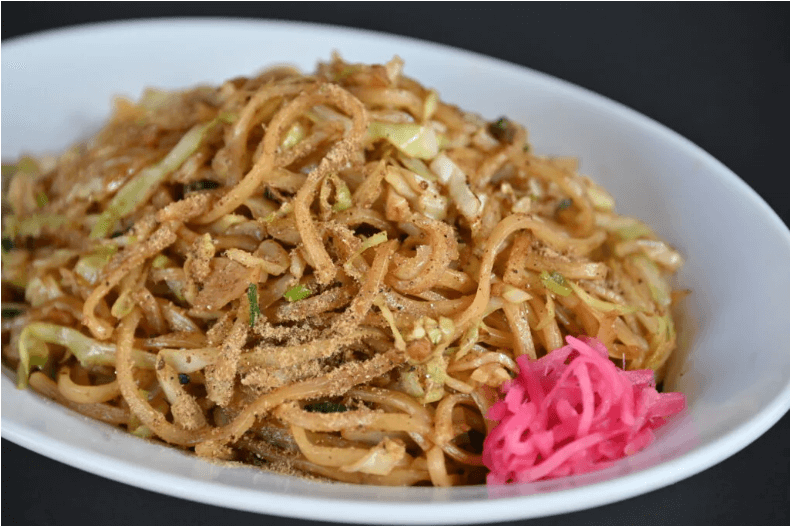
20. Yakisoba Bento
Stir-fried noodles with pork, cabbage and yakisoba sauce. Top with aonori and pickled ginger. Our yakisoba guide covers the regional styles.
- Pack with: a boiled egg, fruit
- Time: about 15 minutes
21. Taco Rice Bento
Okinawa’s taco rice is seasoned ground meat over rice. Pack the lettuce, tomato and cheese in a separate compartment so they stay fresh.
- Pack with: salsa in a small container
- Time: about 15 minutes
Vegetarian and Vegan Bento Ideas (22–26)
22. Tofu Teriyaki Bento (Vegan)
Press firm tofu, dust it with potato starch and pan-fry until crisp before glazing with teriyaki sauce.
- Pack with: rice, broccoli, sesame carrots
- Time: about 20 minutes
23. Tamagoyaki and Vegetable Bento (Vegetarian)
A rolled omelet is the centerpiece, surrounded by small vegetable sides. Add chopped spring onion or spinach to the egg for color.
- Pack with: spinach goma-ae, simmered kabocha, rice with furikake
- Time: about 15 minutes
24. Kabocha and Edamame Rice Bento (Vegan)
Sweet simmered kabocha squash with rice mixed with edamame and a little salt. Use kombu dashi instead of bonito dashi to keep it vegan.
- Pack with: namasu (daikon and carrot salad)
- Time: about 20 minutes
25. Nasu Dengaku (Miso Eggplant) Bento (Vegan)
Eggplant brushed with a sweet miso glaze and broiled. Cut it into bite-size pieces so it is easy to eat with chopsticks.
- Pack with: rice, cucumber pickles, edamame
- Time: about 20 minutes
26. Vegan Onigiri Trio Bento
Three rice balls with different plant-based fillings: umeboshi, simmered kombu and chopped takuan pickle.
- Pack with: cabbage tsukemono, cherry tomatoes
- Time: about 15 minutes
Elaborate and Special-Occasion Bento Ideas (27–30)
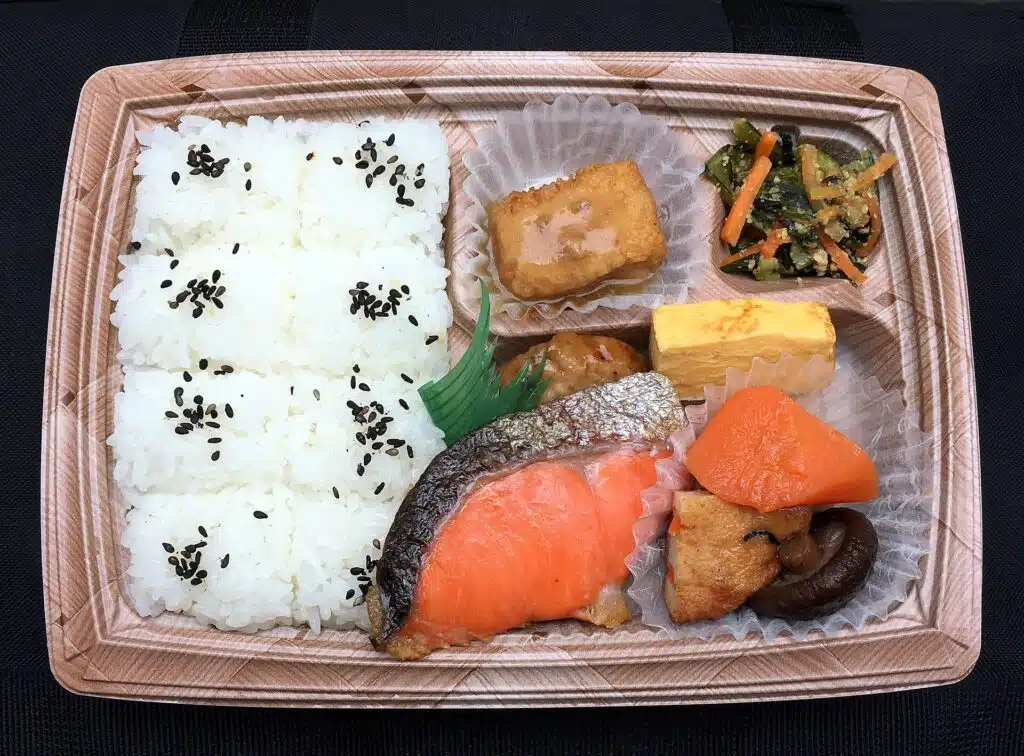
27. Makunouchi Bento
The classic assortment shown in the photo above: rice sprinkled with black sesame, grilled fish, tamagoyaki, simmered vegetables and a few small sides. It takes more time because you prepare five or six small dishes, but it is the best way to practice balance and color.
- Time: about 45 minutes
28. Hanami Picnic Jubako
For cherry-blossom picnics and family gatherings, food is packed into stacked lacquer boxes called jubako and shared. Fill one tier with onigiri or inari sushi, one with karaage and tamagoyaki, and one with vegetables and fruit.
- Time: 1–2 hours for a group
29. Kyaraben (Character Bento)
Kyaraben turn rice and side dishes into faces and animals, such as bears, pandas or chicks, using nori, cheese, ham and food picks. Nori punches and small cutters make this much easier.
- Time: about 30–45 minutes
30. Sekihan Celebration Bento
Sekihan, sticky rice steamed with red azuki beans, is served for birthdays and other happy occasions in Japan. Pair it with grilled sea bream or salmon and a few colorful sides.
- Time: about 1 hour plus soaking
Bento Food Safety Tips
Bento are often eaten hours after packing, so food safety matters more than with a meal eaten straight away.
- Cool everything before closing the lid. Trapped steam creates condensation and a warm, moist environment.
- Keep it cold. Use an insulated bag with an ice pack if the bento will sit for more than a couple of hours.
- Cook everything through. Avoid raw fish, runny eggs and undercooked meat in a packed lunch.
- Drain wet dishes. Excess sauce makes rice soggy and spoils faster. Pack sauces separately.
- Use clean, dry hands or utensils when shaping rice, or wrap onigiri in plastic wrap while forming them.
Packing Tips for a Better Bento
- Pack the rice first, then fill the remaining space with the main dish and sides.
- Pack tightly. Gaps let food slide around and ruin the layout.
- Use dividers. Lettuce leaves, silicone cups or baran (decorative plastic grass) keep flavors apart.
- Cut ingredients small. Everything should be easy to eat in one or two bites with chopsticks. A sharp nakiri knife makes fast work of thin vegetable cuts, and our Japanese vegetable cutting guide shows the classic shapes.
- Prep on the weekend. Cook rice, a main dish or two, and a few vegetable sides on Sunday. Weekday assembly then takes about 10 minutes.
What You Need to Get Started
You do not need special equipment to make bento, but a few tools help:
- A bento box: plastic boxes are light and microwave-safe, stainless steel is durable, and wooden magewappa boxes absorb moisture so rice stays pleasant at room temperature.
- A rice cooker: fresh, well-cooked rice is the base of almost every bento. See our best Japanese rice cookers guide.
- A small tamagoyaki pan: the rectangular pan makes rolled omelets much easier. More in our guide to essential Japanese cookware.
- Silicone cups and food picks for separating and serving small items.
Bento Box FAQ
What do you put in a bento box?
A typical Japanese bento has rice or another staple, one protein, two or three vegetable sides and a small pickle or fruit. The 4:3:2:1 ratio (staple, protein, vegetables, treat) is a good starting point.
Is bento eaten hot or cold?
Most home bento are eaten at room temperature, which is why bento dishes are seasoned a little more strongly than usual. Some people reheat their box in a microwave at work.
How long does a bento box last?
Eat a packed bento the same day, ideally within a few hours, and keep it cool. Cooked components stored separately in the fridge usually keep for 2–3 days.
Can you make bento the night before?
Yes. Cook and cool the components the night before, store them in the fridge, and pack the box in the morning. Rice is best cooked fresh or reheated, since refrigerated rice hardens.
Final Thoughts
The best way to get better at bento is to start simple. Pick one of the quick weekday ideas, like the teriyaki chicken or salted salmon bento, and make it a few times. Once you have a few reliable mains and sides, mixing and matching them into new boxes becomes second nature.
Photo: 毒島みるく via Wikimedia Commons (CC0).
Subscribe for free today! Receive cool recipes, my latest Japanese knife picks and learn about Japanese culture. Delivered every other week to your inbox.